
With What Happened to the Streets, 21 Savage forces hip-hop to interrogate a question many artists avoid: are the ethics and street codes so often glorified in rap legitimate or sustainable?
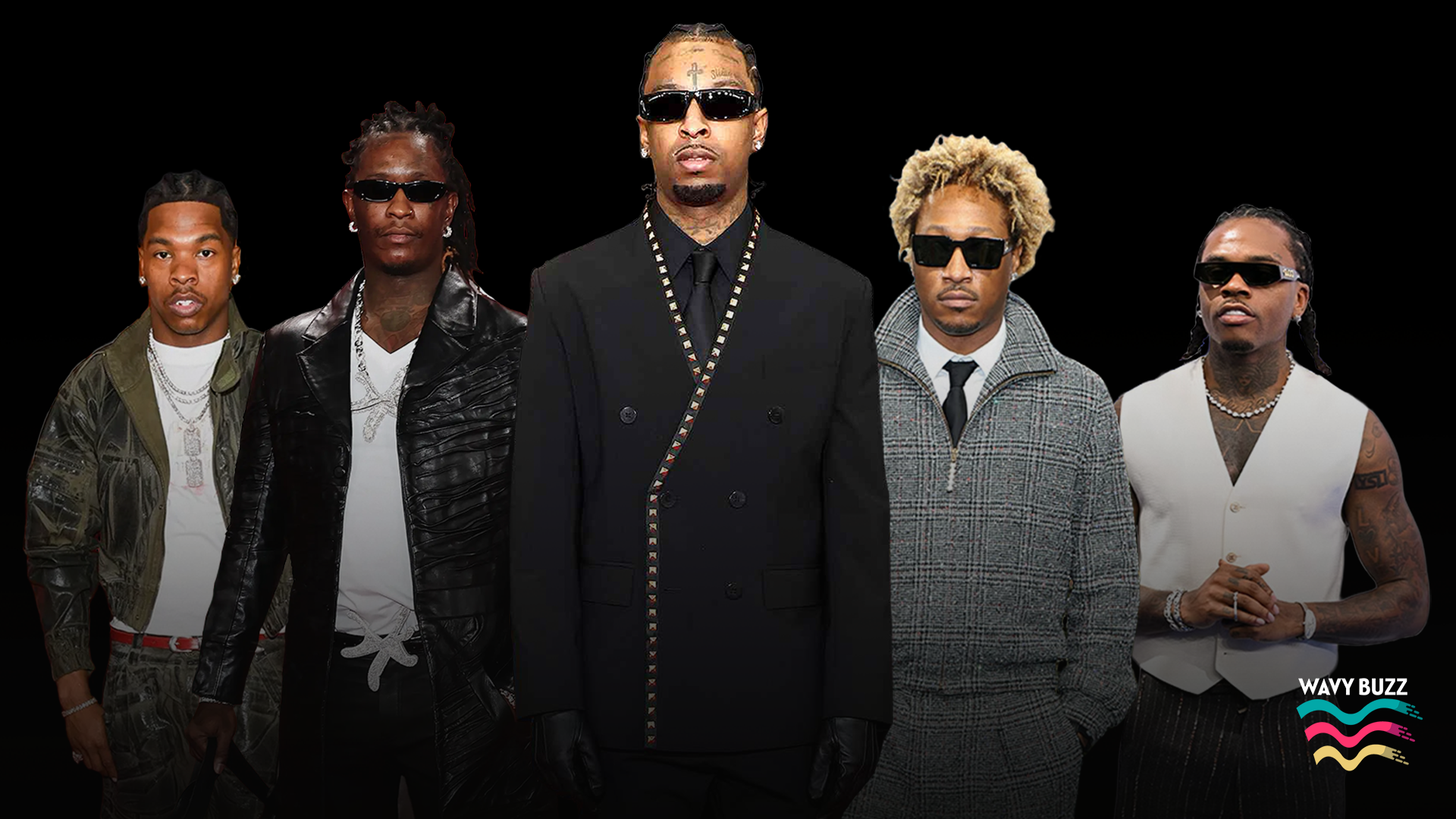
Atlanta’s rap dominance over the past decade has largely been shaped by a tight-knit cohort that includes 300 Entertainment affiliates and stars like Young Thug, Gunna, YSL, Future, Migos, and Lil Baby. Collectively, these Atlanta-based A-listers are responsible for more than half of the most commercially viral “street” rap records of the past five years. But recent legal troubles, snitching allegations, and fractured alliances have exposed how fragile that dominance really is.
The lack of cohesion is beginning to affect not just relationships, but the quality and consistency of the music itself. With What Happened to the Streets, Savage positions himself as both participant and critic — hoping his peers can put their differences aside and focus on the bigger picture: preserving success rather than sabotaging it.
Disunity in the Streets
Wayno on disunity amongst Atlanta’s rappers.
A Long Conversation About a Short Shelf Life
To articulate his stance, Savage sat down with Big Bank for a nearly three-hour episode of Perspektives with Bank. The interview centers on a comparison between the street era of the ’90s and early 2000s and today’s hyper-documented reality, where social media turns self-incrimination into content.
Savage emphasizes that selling drugs has always been dangerous, but before the internet, the risk-to-reward ratio felt different. Today, the ubiquity of cameras, posts, and digital paper trails has eliminated any illusion of discretion. To underscore his point, he references kingpins from the ’80s and ’90s and notes that very few people today can make a living solely in the streets anymore. The cons now overwhelmingly outweigh the pros.
Survival, Not Glamour
Savage’s entry into street life, he explains, wasn’t rooted in bravado, it was a byproduct of circumstance. As an immigrant from the United Kingdom without proper documentation, legal employment wasn’t an option. Supporting himself and his siblings left him with limited choices.
Growing up in Atlanta’s inner city, visibility mattered. Clothes and sneakers weren’t just fashion — they were social currency. Savage recalls realizing it could take his mother months to afford him a new pair of Nike Air Force 1s. Faced with that reality, he decided many young kids in similar situations make — he took matters into his own hands.
He started small — selling dime bags of weed — and flipped the profits to access Atlanta’s skating rinks and youth clubs like Cascade. Those spaces, he argues, are part of a deeper grooming culture embedded in the city.
Atlanta’s Unspoken Grooming Culture
Savage gets especially candid when discussing how Atlanta unintentionally conditions children for nightlife culture. Teenagers want to be seen, to belong, to participate — and they’ll hustle however they can — to afford it. Some took out trash, others braided hair. Everyone found a way.
The environments themselves mirrored adult club settings: pitchers on tables, sectioned seating at premium prices, and status tied to spending. According to Savage, those early exposures leave a lasting imprint:
So your ass is getting groomed for the club — you goddamn in middle school. Now when you 30, n**a, I been going to the club since I was 11, 12 years old. Bro, f**k the club. Atlanta groomed a n**a, bro. And n**as banging out at these clubs.
21 Savage Tweet
By the time many Atlantans reach their thirties, they’ve already logged decades of nightlife conditioning — often with destructive consequences.
Escalation and Consequences
As ambition grows, so does appetite. Skating rinks eventually felt too small. At 18, Savage visited Buckhead for the first time — a moment that recalibrated his understanding of wealth and proximity. Seeing how close he was to affluence pushed him deeper into the hustle.
That transition — from marijuana to cocaine — is when the money accelerated. For a time, it worked. Savage was able to support himself, his mother, and his siblings. But the costs were compounding. During the interview, Savage outlines three archetypes born from the projects:
- The hood dude — someone who knows the environment but avoids unnecessary trouble
- The hustler — someone focused on money and standing on business
- The street dude — someone who recognizes no rules and takes whatever he wants
When asked where he fit, Savage didn’t hesitate, he claimed the streets.
Trauma as a Turning Point
Everything changed on Savage’s 21st birthday. A shooting left his best friend Johnny dead and Savage himself shot six times. He survived, but the trauma reshaped his life.
That moment pushed him toward rap not just as a career, but as therapy and escape. His authenticity — amplified by the internet’s permanent receipts — helped fuel his rise. Fans could trace his lyrics directly to lived experience, lending credibility few could dispute.
Savage also credits Atlanta pioneers who followed similar paths, Gucci Mane, Young Jeezy, and T.I., but he’s clear: What Happened to the Streets signals the end of that era. The drug-dealer-to-rapper pipeline is obsolete.
Everything Has an Expiration Date
Pressed further by Big Bank, Savage explains the shift through history. Every street economy, he argues, has a shelf life.
- Cocaine thrived in the ’80s as a “social drug”
- Crack devastated inner cities after being commoditized
- Lean emerged next, followed by pills and synthetic opioids
Each wave left destruction in its wake — from Brooklyn to Miami, from the Midwest to the Pacific West. Fentanyl has accelerated loss among American youth. Savage’s conclusion is blunt: the streets are at an inflection point, and the only guarantees left are prison or death.
“F**k the Streets” — and the Backlash
Fuck the streets @21savage
— Young Thug ひ (@youngthug) December 19, 2025
Following the album rollout, Savage ignited controversy with a simple phrase: “F**k the streets.”
Some peers echoed his sentiment. Others felt betrayed. Critics accused him of rewriting history or abandoning the very environment that built him. 6ix9ine was among the loudest voices, framing Savage’s stance as hypocrisy and selective morality. In response, Savage clarified his message on Instagram:
When I say f the streets, I’m talking about the part that gave me trauma and made me can’t sleep at night. If you ain’t tired of that part, you ain’t been through it.”
21 Savage Tweet
Mourning, Reflection, and Final Words
Whether his message resonates universally or not, the album’s closing track, “I Wish,” makes his intent unmistakable. It’s a reflection on loss and a tribute to artists taken too soon, through violence or addiction, at the height of their careers: Young Dolph, Nipsey Hussle, Takeoff, Lil Keed, Trouble, XXXTentacion, and many others.
What Happened to the Streets isn’t a condemnation of where Savage came from. It’s a warning about staying too long and mistaking survival for success.
Hip-hop, he suggests, doesn’t need more street legends. It needs more survivors who choose to live.