
Dave Chappelle has operated at the highest level of comedic excellence for more than two decades. One of the primary reasons he continues to command such reverence is his refusal to retreat from controversy. He does not soften his viewpoints for comfort, nor does he dilute his message for mass approval. With his latest Netflix special, The Unstoppable, Chappelle proves — once again — that he remains committed to saying exactly what he believes, regardless of consequence.
Grounding the Conversation at Home
The special opens with Chappelle grounding his observations close to home. He addresses the political tension spilling into his hometown of Yellow Springs, Ohio, particularly surrounding immigration. The city has experienced a recent influx of Haitian migrants granted temporary protected status under the Biden administration. While the change has created logistical challenges, Chappelle points out an inconvenient truth: these migrants have contributed meaningfully to the local economy by filling labor roles many native residents were unwilling to take. The point is not framed as policy advocacy, but as lived reality — one that resists the oversimplified narratives dominating political discourse.
Juxtaposition as Provocation
From there, Chappelle escalates into more contentious territory, using juxtaposition as his primary tool. He contrasts the relative ease of telling jokes in Saudi Arabia with the heightened sensitivity of American audiences — particularly regarding his comments about the transgender community. Chappelle is acutely aware of his reputation in U.S. media and remains unapologetic. He does not ask for forgiveness, nor does he signal any intention to pivot.
The Falcon Parable
To illustrate this tension, Chappelle recounts a fictional story from a performance in Dubai, where he was gifted a falcon to enhance the spectacle of his set. The bird, he explains, was a trained species — one that only attacks when unmasked. Wanting the falcon to share in the joy of the crowd’s laughter, Chappelle removes its mask, unaware that this action signals attack mode. The falcon takes flight and — at nearly 200 miles per hour — fatally strikes a transgender audience member. Chappelle, as the one who unmasked the bird, is charged with attempted murder.
Offense Versus Harm
The absurdity is intentional. Chappelle emphasizes that while the event is devastating, attempted murder is classified only as a misdemeanor under Saudi law, allowing him to continue performing. The story is entirely fictional, yet the point is unmistakable: while his comedy may offend, it is ultimately harmless when compared to the real political, economic, and institutional violence shaping American life. Offense, he argues, is not the same as harm.
From Provocation to Reflection
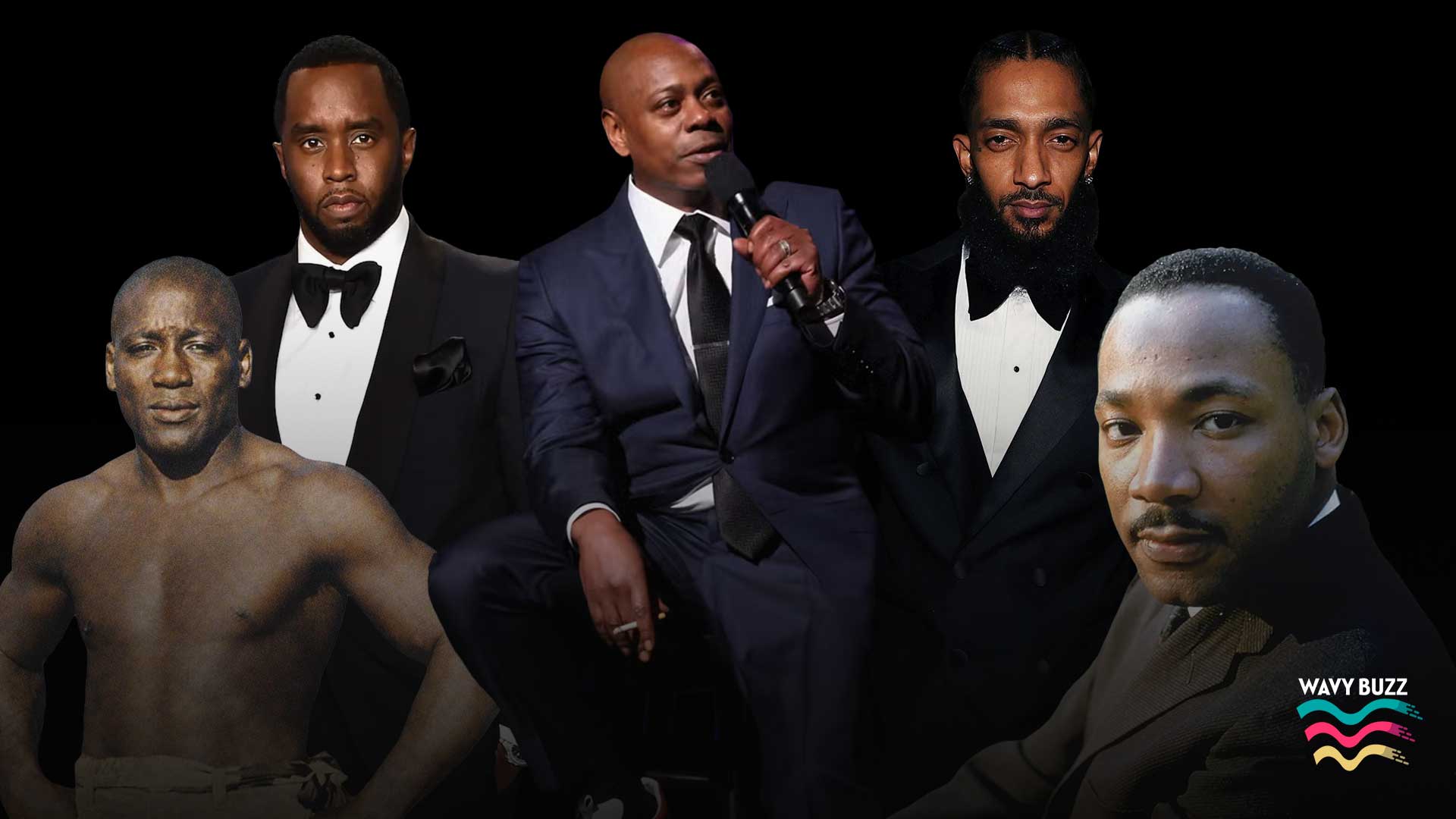
As the hour and a quarter special moves toward its conclusion, Chappelle shifts tone. He announces his final act and transitions from provocation to reflection, weaving together a sweeping historical narrative that connects figures who, at first glance, seem unrelated: Jack Johnson, Sean “Puff Daddy” Combs, Stevie Wonder, Aretha Franklin, Senator John McCain, Nipsey Hussle, and his late mentor Charlie Barnett. The connective tissue between them is power — how it is gained, challenged, punished, and ultimately revoked in America.
Grace, Obligation, and American Conditioning
While reflecting on the nation’s tense racial history, Chappelle recalls attending Aretha Franklin’s funeral, where Stevie Wonder served as the principal performer honoring her legacy. Overcome with emotion, Stevie struggled to continue, prompting Chappelle to join him on stage and offer words of encouragement. In that moment, Stevie made an unexpected request: that Chappelle attend the funeral of the late U.S. Senator John McCain in Washington, D.C., scheduled for the following day. Already committed in Detroit, Michigan, Stevie asked Chappelle to attend as a gesture of respect on behalf of the Black community. The significance of this request, Chappelle explains, traces back to Stevie Wonder’s long campaign — alongside the Martin Luther King Jr. family — to establish Martin Luther King Jr. Day as a national holiday. As part of that effort, Stevie composed the song Happy Birthday, which swept the country and helped secure a unanimous congressional vote, with the lone opposing vote cast by Senator McCain. Despite McCain’s resistance to the cause, Stevie urged Chappelle to show gratitude — a gesture Chappelle highlights as emblematic of a deeply ingrained pattern of grace and obligation within Black Americans’ social conditioning.
Jack Johnson and the Price of Dominance
Chappelle begins with Jack Johnson, the first Black heavyweight boxing champion. In 1910, Johnson shattered racial boundaries by defeating white opponents at a time when Black boxers were barred from competing against them. When former champion James J. Jeffries came out of retirement to challenge Johnson, the fight became a referendum on race itself. The racial hostility surrounding the bout was so intense that The New York Times infamously warned that a Black victory would cause “thousands and thousands of ignorant brothers” to mistake athletic success for social equality.
If the black man wins, thousands and thousands of his ignorant brothers will misinterpret his victory as justifying claims to much more than mere physical equality with their white neighbors,
The NYT, 1910 Tweet
Unstoppable in Victory
Johnson won decisively. He knocked Jeffries down repeatedly until the fight was stopped. In Chappelle’s words, “Johnson beat the living shit out of Jeffries.” With victory came wealth, fame, and a sense of invincibility. Johnson lived lavishly, flouted authority, and paid fines on the spot — once handing police $300 cash for speeding and casually announcing he intended to drive the same speed home. He was, in every sense, unstoppable.
Vice, Surveillance, and the Mann Act
But Johnson also had vices — most notably, relationships with white women. In a society structured on racial hierarchy, this was seen not merely as taboo but as rebellion. The federal government took notice. In 1913, Johnson was prosecuted under the Mann Act for transporting a white woman across state lines for “immoral purposes,” a charge widely viewed as racially motivated.
A Modern Parallel: Sean “Diddy” Combs
From Johnson, Chappelle pivots to a modern parallel: Sean “Diddy” Combs. Chappelle recounts warnings he received early in his career about suspicious venues and peculiar lighting — signals, he was told, that federal agents might be present. He suggests that the rise of Bad Boy Records and figures like Biggie and Puff triggered federal scrutiny that has persisted for decades. Joking through the darkness, Chappelle quips that while acknowledging Cassie Ventura’s strength, he knows at least fifteen men who would fight Diddy for $30 million. The humor is sharp, but the implication is serious: power attracts surveillance.
Nipsey Hussle and the Weight of Conspiracy
The thread continues with Nipsey Hussle. Chappelle recalls meeting Nipsey during the Victory Lap album release weekend in Atlanta, chauffeured by T.I., surrounded by industry elites—including Puff himself. Nipsey stood out as unusually thoughtful, grounded, and wise beyond his years. When Nipsey was murdered a year later, Chappelle attended the funeral and noticed the same ominous lighting he remembered from his early comedy days — reviving his sense that something was off.
Debunking the Myth
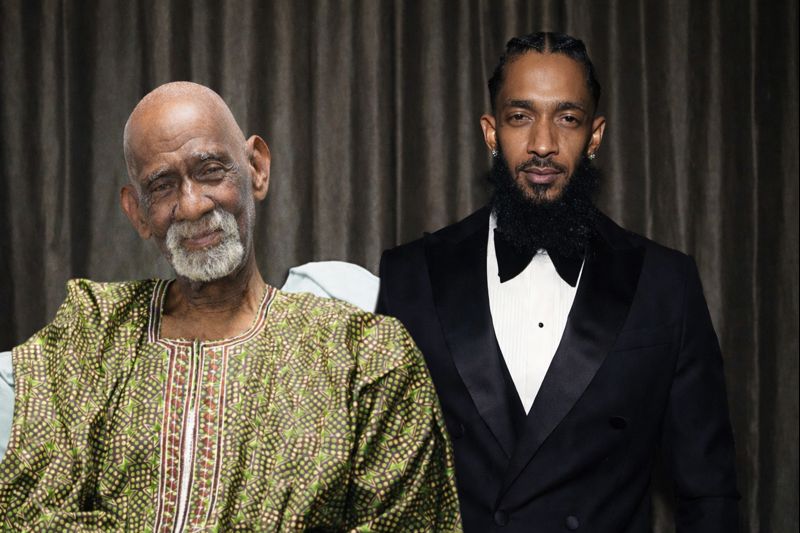
Addressing conspiracy theories surrounding Nipsey’s death and his rumored work on a documentary about Dr. Sebi, Chappelle ultimately debunks the idea that Sebi possessed a secret cure suppressed by the government. He does so through a deeply personal story about Charlie Barnett, his comedic mentor. Barnett, a brilliant but troubled comic, contracted AIDS through reckless behavior. Chappelle took him to Dr. Sebi, who worked with Barnett for months. Barnett still died. The conspiracy, Chappelle concludes, does not hold.
Patterns That Refuse to Disappear
Yet with Johnson and Combs, Chappelle suggests the pattern is harder to ignore. The Mann Act — originally the White-Slave Traffic Act of 1910 — was designed to combat prostitution and trafficking but has historically been wielded against powerful Black men. Johnson was destroyed by it. Chappelle argues that Combs, despite decades in the public eye and enormous wealth, has now been ensnared by the same law. Coincidence, perhaps — but history makes that conclusion difficult.
The Final Reckoning
In the end, Chappelle leaves the audience with a sobering reflection. Jack Johnson once admitted he threw everything away for pleasure. Chappelle juxtaposes that admission with the downfall of Sean Combs, suggesting that while personal choices matter, systems of power are always waiting for a moment of vulnerability.
Clarity Over Comfort
The Unstoppable is not simply a comedy special. It is a meditation on fame, race, surveillance, and the cost of being truly free in America. Chappelle does not ask the audience to agree with him — only to listen. And in doing so, he proves that his most dangerous weapon has never been offense, but clarity.