
When Masculinity Becomes a Buzzword
The word performative has evolved into a persona — one used to question whether someone is being genuine at all. Across the internet, twenty- and early thirty-somethings are locked in endless discourse over which behaviors, tastes, and mannerisms qualify as “performative.” It’s a fine line. What was once a descriptor having, in many cases, become a dismissal. Being labeled performative now functions like a scarlet letter — a term Gen Z often weaponizes to shut down discomfort, uncertainty, or what they simply deem “bad vibes.”
It now lives in the same exhausted cultural graveyard as pretentious, woke, and cringe — words that once carried precision but now mostly translate to: I don’t like this person, and I don’t want to explain why.
That’s the real tension inside the “performative male” debate. It isn’t whether men are becoming softer, more expressive, or more aesthetic than before. It’s whether we are still capable of distinguishing performance from projection. To understand where that line breaks down, consider two men accused of the same thing for entirely opposite reasons: Caleb Williams and Jacob Elordi.
Performance That Precedes Permission
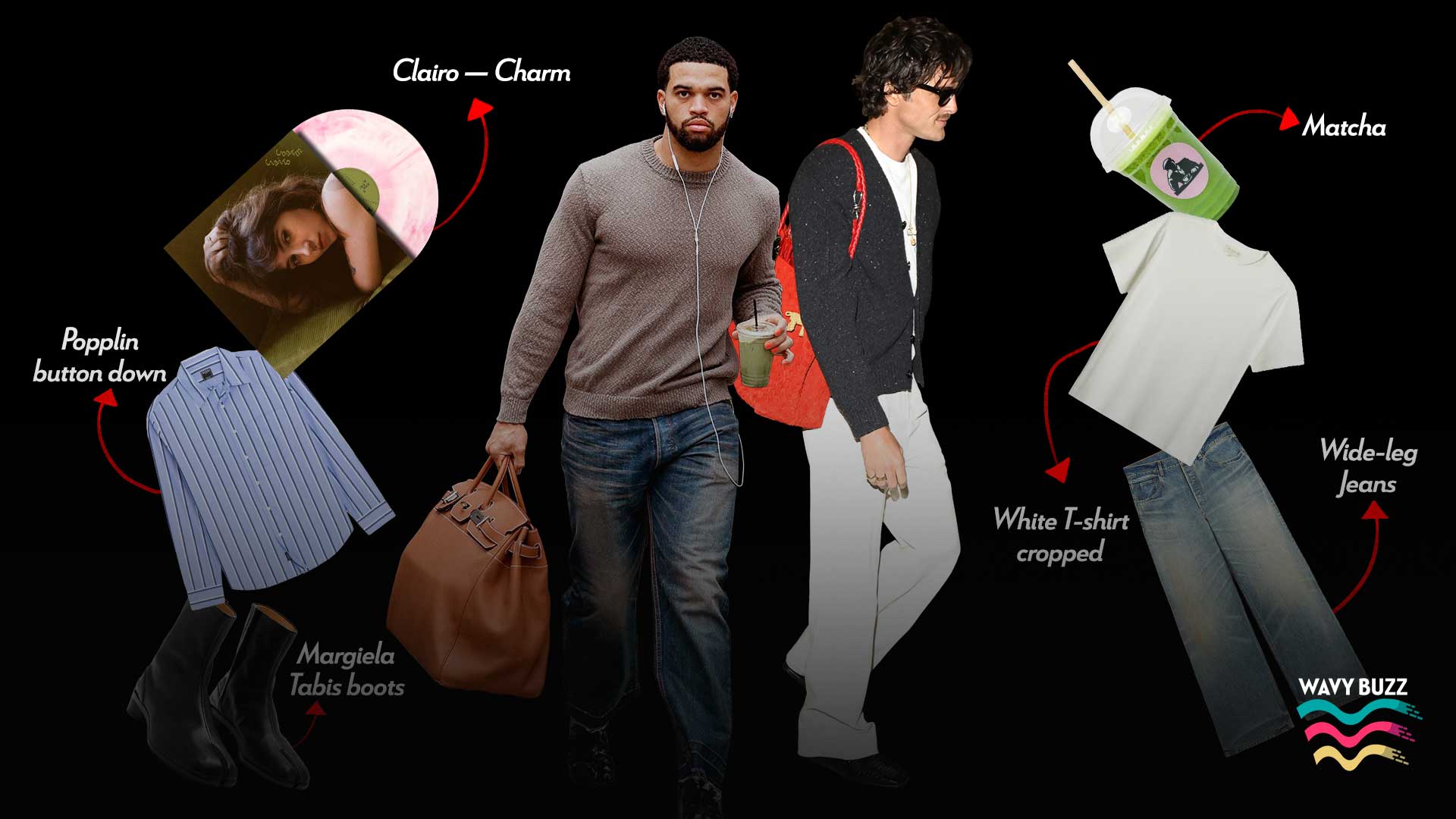
Ahead of his matchup against the Cincinnati Bengals on November 2, 2025, Caleb Williams walked into his pregame tunnel and was promptly crowned by TikTok as the “performative male final boss.” Critics dissected his appearance with surgical precision, highlighting every supposedly attention-seeking detail:
- Margiela Tabis on his feet,
- a Stone Island jumper with the badge deliberately visible,
- Timbs-coded denim,
- painted nails,
- wired headphones,
- a Birkin bag,
- and a matcha latte.
There was enough surface-level evidence to ask whether any of it was necessary. And then —crucially — he delivered a game-winning performance. Williams threw for 280 yards and three touchdowns, added 53 rushing yards, and even caught a touchdown pass himself, leading Chicago to a chaotic 47–42 victory.
That final detail matters more than anything else. Without it, the look risks irony. With it, the look becomes authority.
View this profile on InstagramCALEB WILLIAMS (@ayeeecaleb) • Instagram photos and videos
Caleb Williams isn’t asking permission to expand masculinity. He’s doing it after dominating in one of the most traditionally masculine arenas imaginable. His aesthetic doesn’t compensate for insecurity — it sits atop proven excellence. That’s why his Birkin reads as confidence rather than commentary, his nail polish as freedom rather than signaling, his matcha as calm rather than cosplay. His performance precedes his presentation.
When Sincerity Gets Penalized
Now contrast that with Jacob Elordi — a man accused of “performative masculinity” for something far less theatrical: reading books and talking about them.
At 6’5”, roughly the average height of NBA superstars, Elordi stands out immediately, especially within the arts, a field largely divorced from athletic dominance. His presence alone invites scrutiny. Add to that his range — acting, modeling, and an evolving pop-cultural persona — and the internet predictably spirals, particularly among relationship-curious young women attempting to decode the Euphoria star’s appeal.
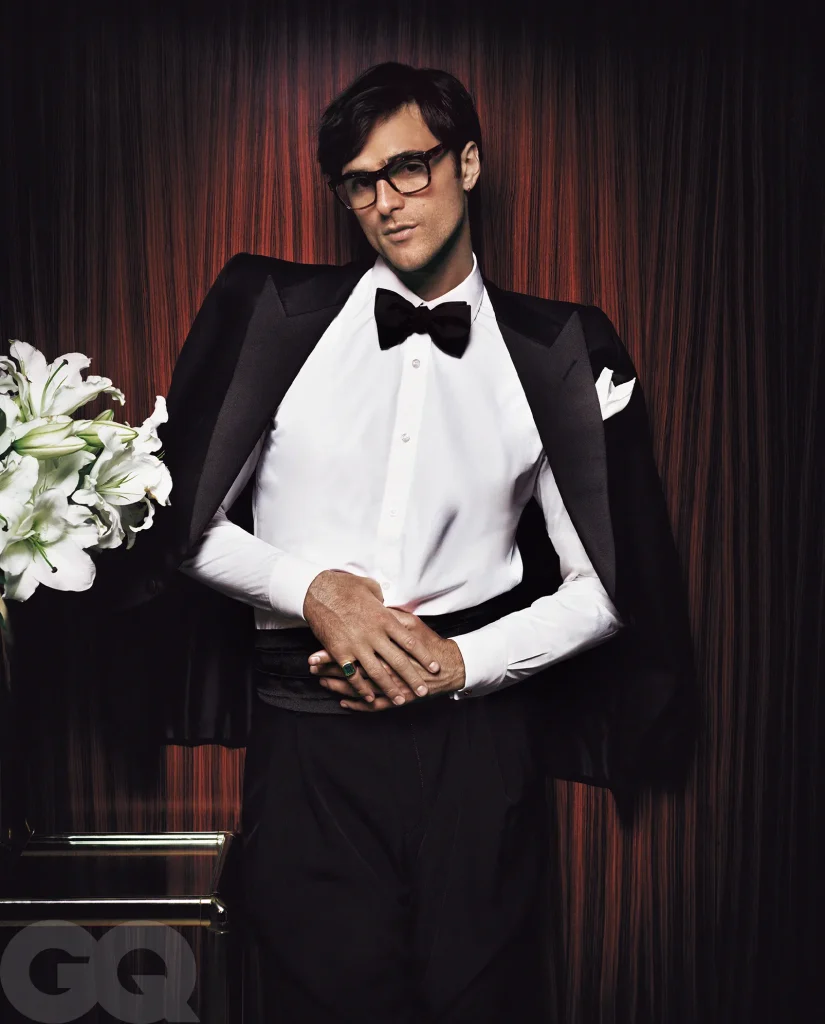
Elordi’s sense of style is widely admired, but his depth extends beyond fashion. He’s frequently spotted reading in airports or in transit — behavior that, fairly or not, is atypical for men in their late twenties, many of whom spend leisure time betting on sports or playing video games. Whether intentionally or not, Elordi has become a symbol of the modern renaissance man. The downside is that not everyone believes it. His Saturday Night Live monologue, for instance, was criticized for focusing more on his attractiveness than his comedic ability.
During interviews promoting Frankenstein, Elordi is routinely asked what he’s reading. He answers. He’s asked about his craft. He reflects. At one point, he even expresses frustration that reading cannot simply remain private — that it must be turned into a headline or a personality trait. His suggestion is simple: imagine if people put their phones down and read more.
What may have been intended as encouragement was received very differently. Critics quickly reduced his behavior to familiar accusations:
- “Performative male,”
- “Trying too hard,”
- “Doing it for women.”
Where the Word Collapses
This is where the word collapses under its own weight. What exactly is the performance here?
In an era shaped by artificial intelligence and algorithmic intent, suspicion has become reflexive—even toward human behavior. The concept of the performative male has gained traction partly because some men do, in fact, adopt curated personas to improve their odds on dating apps. Online, this manifests as the “golden retriever boyfriend” archetype: Instagram profiles engineered with dogs, babies, astrology, matcha lattes, Clairo vinyl records, and every other gamified signal associated with being “one of the good guys.”
Across Reddit and similar platforms, complaints stemming from these encounters are common, prompting many relationship-seeking young women to become hyper-vigilant toward anything that feels rehearsed or cliché. The problem is that the lines blur without due diligence.
Pop culture figures, due to their ubiquity, often become proxies for how people interpret sincerity at scale. But confirmation bias plays a significant role here. In the cases of Elordi and Williams, we’re looking at two highly successful men articulating values they are actively living by. One does not become a superstar quarterback or a multi-award-winning actor by accident. Reducing their behavior to performance isn’t analysis — it’s avoidance. It’s a buzzword used to sidestep discomfort with sincerity.
Performance Is the Baseline, Not the Crime
If we’re being honest, everyone is performative. At work, at home, online — performance is part of the human condition. It only earns a bad reputation when it becomes deceptive or harmful. In a digital environment where profiles are curated, values are broadcast, and identity is flattened into optics, performance isn’t the exception. It’s the baseline.
So, when men like Elordi are accused of being performative, what’s often being said is simpler: this makes me uncomfortable, and I don’t trust the intention.
But discomfort isn’t evidence.
You can’t accuse someone of performance without identifying the audience, the incentive, and the contradiction between words and actions. Without that framework, performative becomes a socially acceptable substitute for I don’t like him.
This doesn’t mean performative masculinity doesn’t exist. It does — but its signs are subtle. Softness appears only in curated spaces. Feminist language fades under pressure. Aesthetic cues replace internal work. Vulnerability becomes an accessory rather than a practice.
This is where quarter-zip masculinity lives: safe, neutral, and professionally palatable. It signals emotional intelligence without requiring risk. Matcha substitutes for self-care without introspection. Wired headphones suggest rebellion without sacrifice. It is performance without foundation.
Expression vs. Substitution
What the discourse often avoids is simple: expression is only celebrated once competence is proven. Caleb Williams can carry a Birkin because his dominance is unquestioned. Jacob Elordi can talk about books because his curiosity appears consistent rather than opportunistic.
The issue isn’t expression — it’s substitution. When the look replaces the labor.
Men who express softness, intellect, or emotional literacy are still treated with suspicion, particularly online. The assumption is that they are performing for approval. If a man can’t read publicly without being accused of posturing, what we are really saying is that male sincerity isn’t trusted unless it’s validated through dominance, suffering, or silence.
That isn’t progress. It’s a different cage.
@whois.jason @Richdafifth life different when u gotta quarter zip #matcha #quarterzip #performative #niketech ♬ original sound - Jason Gyamfi
Earned Freedom vs. Cultural Cynicism
The performative male exists — but not everyone accused of being one deserves the label. Caleb Williams represents earned freedom: performance first, expression second. Jacob Elordi reflects misplaced skepticism, where sincerity is punished by cultural cynicism.
The true failure of this discourse is linguistic laziness. When performative becomes a catch-all insult, it loses meaning. We lose the ability to distinguish confidence from cosplay, sincerity from signaling, and aesthetic from alignment.
Masculinity isn’t dying. It’s being renegotiated in public — and public renegotiation will always look awkward before it looks settled.
The real question isn’t whether a man carries a Birkin, drinks matcha, reads books, or paints his nails. It’s whether those choices hold when no one is watching —and whether they collapse the moment validation disappears.
The Most Performative Thing of All
Caleb Williams answers that question with touchdowns.
Jacob Elordi answers it with consistency.
The internet answers it with a buzzword.
And that may be the most performative thing of all.