
Wave Capital — Finance Angle · Week of May 8, 2026
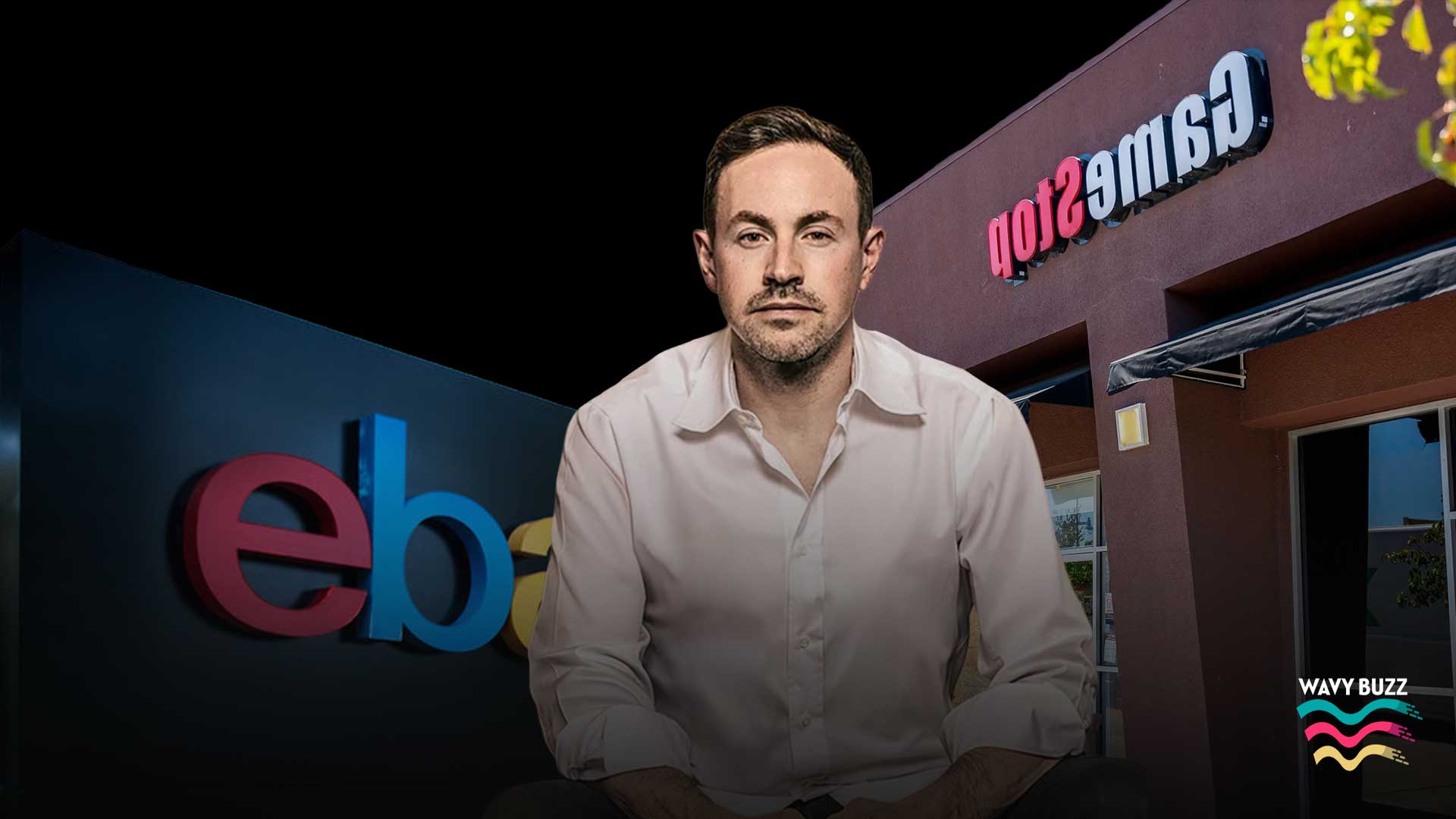
Ryan Cohen's Half Cash Half Stock Pitch for GameStop's Takeover of eBay
GameStop makes an unsolicited $55.5B bid for a company worth four times its own market cap. Cohen goes on TBPN to explain the dilution math, declares war on a $2.5B marketing budget, and reveals a zero-capex fallback plan that eBay ignored a year ago.
The deal at a glance
Ryan Cohen's GameStop (GME) launched an unsolicited bid for eBay on May 3, 2026 — offering $125 per share, structured as 50% cash and 50% GME stock, for a total equity value of approximately $55.5 billion.
The Meme Moment — CNBC Squawk Box, May 4, 2026
Cohen's Squawk Box appearance was supposed to be a pitch. It became a viral event. When Andrew Ross Sorkin asked how a $12 billion company finances a $55.5 billion deal, Cohen went to his preferred phrase.
Becky Quick asked a second time where the remaining ~$16 billion would come from. Cohen replied: "I don't understand your question." Quick laughed audibly on air. GME dropped more than 10% that session.
Cohen went to TBPN the following day and actually explained himself. That interview is where the real thesis lives.
Cohen's Core Diagnosis — TBPN, May 5, 2026
Cohen sees eBay as a 30-year brand with $80B in annual GMV, 134 million active buyers, and no inventory risk — a durable, predictable cash engine that has been allowed to stagnate.
His Chewy analogy is more than a talking point: he built Chewy from $0 to a $3.35B sale by obsessing over fulfillment, customer experience, and cost discipline.
The diagnosis is twofold: the asset is undervalued because the management culture is frozen. Directors earn a combined $4 million per year — roughly $350,000 each — with no meaningful downside.
Equity has been handed out "like candy." There is no urgency to innovate or find new profit pools.
The Primary Route — Merger Structure
Cohen walked through the capital structure on TBPN more clearly than he did on Squawk Box.
The deal has three legs: $20 billion in bridge financing from GME's bank, $9.4 billion in GameStop cash on hand as of January 31, 2026, and a 100% equity rollover of both shareholder bases into the combined entity.
On the dilution question — the one Squawk Box couldn't get a straight answer on — Cohen was precise on TBPN:
Theme 1 — Is It Economically Viable?
The $5.5B Operating Expense Critique
Cohen was referring to eBay — not GameStop.
eBay's FY2025 filings show approximately $5.65B in operating expenses against $11.1B in revenue, with sales & marketing alone consuming roughly $2.39B.
GameStop, by contrast, reduced SG&A from roughly $1.32B in FY2023 to an estimated ~$909M in FY2025.
Theme 2 — Does eBay Have Too Many Employees?
Cohen quoted 11,500 employees — eBay's FY2024 year-end headcount.
By December 2025, headcount had climbed to roughly 12,300 employees despite multiple layoff rounds.
A peer comparison sharpens the argument:
The pattern matters more than the headline number. eBay has reduced thousands of jobs across multiple restructuring rounds — yet headcount repeatedly climbed back higher.
That institutional inertia is exactly what Cohen believes leverage and ownership pressure can break.
Theme 3 — Does the 1,600-Store Footprint Create an Edge?
Cohen's most interesting operational argument has less to do with gaming and more to do with logistics.
eBay's listing flow remains cumbersome for many sellers: photos, authentication, shipping, verification, trust, fulfillment friction.
Cohen's thesis is that GameStop's 1,600 physical locations become intake nodes for the eBay marketplace — effectively turning the retail footprint into a nationwide collectibles and authentication network.
If The Deal Fails — The Fallback Plan
The concept was simple: GameStop collectibles would flow through eBay's marketplace infrastructure and both companies would benefit from incremental seller volume.
According to Cohen, the response from eBay leadership was effectively nonexistent.
Nobody moved with urgency. Nobody engaged seriously. The proposal stalled.
What initially looked like a business-development miss eventually became part of Cohen's activist argument: the company lacked urgency, ownership mentality, and operational aggression.
Cohen's Vision — What eBay Becomes Under His Ownership
Wave Capital Take
The TBPN interview is the version of Cohen that actually makes sense.
He correctly identifies eBay's core tension: a durable marketplace business trapped inside a slow-moving management culture with weak incentives and limited urgency.
His governance argument is compelling: no salary, no bonus, performance-only compensation, and leverage used as a forcing function against institutional bloat.
The data broadly supports his expense critique. Shopify generates roughly comparable revenue with thousands fewer employees and materially better revenue-per-head efficiency.
His marketing critique may be the sharpest point of all: spending billions in sales & marketing to acquire marginal net-new users on a 30-year-old platform raises serious questions about organizational efficiency.
But the financing problem remains real.
TikTok Shop is scaling aggressively. Live commerce remains early. And executing a leveraged transformation while simultaneously rebuilding seller experience and competing across multiple fronts is extraordinarily difficult.
Whether Cohen's answer — radical cost discipline, obsessive operational intensity, and belief in the brand — represents visionary leadership or overconfidence is ultimately the question the market is trying to price.