
For decades, getting heard meant getting through someone else. In the entertainment business, that meant navigating a powerful network of gatekeepers who determined which artists, stories, and ideas reached the masses.
Depending on the subject, the formula was largely the same: a recording artist needed radio; an entrepreneur needed the business press; a celebrity needed television. Somewhere between the person with something to say and the millions of people who might want to hear it stood an institution deciding what was worthy of attention. CNN and Fox News did it for news. MTV and BET did it for music and youth culture. Radio programmers, magazine editors, record executives, and television producers occupied different positions along essentially the same distribution chain. Collectively, these institutions came to define legacy media.
The internet weakened those gates. YouTube gave anyone a broadcast channel. Instagram created a new class of celebrity. TikTok turned recommendation algorithms into tastemakers. Livestreaming, however, represents something fundamentally different. Streamers now play a major role in how audiences discover, consume, and interact with content. The streamer is no longer simply creating content; they are curating narratives that can compete directly with legacy media, often eliminating the need for it altogether.
The streamer is becoming the distribution network.
A Record Born on the Internet
There is nothing particularly unusual about three personalities collaborating on a song. What is unusual is the machinery surrounding it — or, more accurately, the machinery that wasn’t necessary.
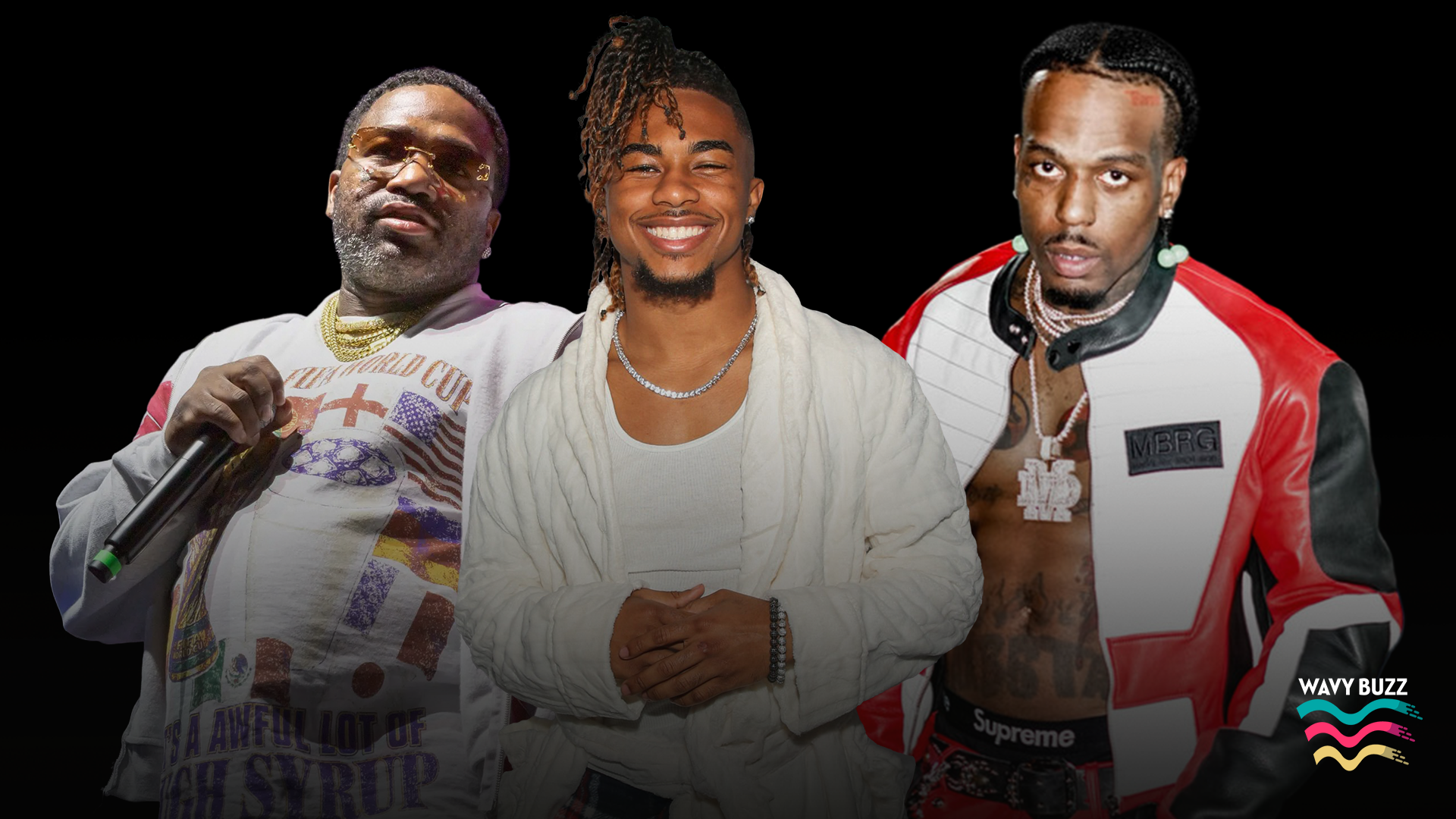
Houston rapper Sauce Walka recently teamed up with former boxing world champion Adrien Broner and streamer and boxer DeenTheGreat for “Kickn Flava,” an unlikely collaboration when viewed through the lens of their respective careers. Sauce Walka comes from an established hip-hop ecosystem, Broner built his name in professional boxing, and DeenTheGreat has built much of his following through boxing and livestreaming. On the surface, their career paths have little in common. On a livestream, those distinctions matter considerably less.
For months, Broner had become a recurring presence within DeenTheGreat’s streaming universe, where their broadcasts blurred the boundaries between reality television, sports, comedy, and internet spectacle. One May stream featuring Deen and Broner averaged roughly 12,400 concurrent viewers over more than five hours, peaking above 14,000, according to KickTracker. Deen’s broader audience reaches hundreds of thousands of followers.
But audience size only tells part of the story. Deen and Broner had cultivated an organic connection with viewers through the candid and vulnerable moments they shared on stream. Their relationship became a source of genuine entertainment and, at times, viral pop-culture moments.
Sauce Walka recognized an opportunity within that ecosystem, lending his musical talent to a comedic bit involving Broner and Deen. What began as a moment of entertainment eventually became something more: a record.
There was no need to manufacture a behind-the-scenes documentary explaining how these personalities met; the behind-the-scenes footage was already the product. There was no need to introduce Broner to Deen’s audience because they already knew him, nor was there a need to explain why Sauce Walka had entered the picture. Viewers watched the relationships develop in real time.
The collaboration wasn’t merely promoted through content. The collaboration was the content.
What Happens When the Press Tour Comes First?
Traditionally, music marketing begins once the final product is complete. The artist works with a label to select a release date. Upon confirmation, publicists orchestrate the rollout — interviews, podcast appearances, social campaigns, influencer partnerships, digital advertising, and grassroots marketing efforts to build momentum.
At the center is typically a lead single, which can be repurposed through “clipping” — turning moments from a song, interview, performance, or music video into short-form content designed for social distribution.
The objective is straightforward: manufacture enough attention around a release to convince audiences that something culturally significant is happening, with the hope that the momentum translates into streams, sales, and a position near the top of the Billboard charts.
Streaming reverses that sequence.
The audience can be present before the song even exists. They watch the personalities meet, hear the jokes, witness the disagreements, and follow the studio session as it unfolds. Moments migrate across TikTok, YouTube, Instagram, and X. Inside jokes emerge, viewers become familiar with the personalities, and the audience develops a relationship with the story before there is even a finished product to consume.
By the time the song arrives, the audience isn’t encountering it for the first time. They have already experienced the story surrounding it.
“Kickn Flava” offers an early example of this dynamic. The official video was released through Sauce Walka’s SauceDatTV channel and quickly gained traction across YouTube. The precise numbers will continue to change, but the mechanism is more important than any individual metric. The record did not first need a major magazine feature, television appearance, or traditional media placement to establish relevance. Its initial distribution advantage came from an audience that had already been assembled around the personalities involved.
This is direct-to-consumer media applied to culture: build the audience first, create the product within the community, and let the audience become the distribution network.
The Streamer Is Becoming the Media Property
We still tend to describe people like DeenTheGreat as “streamers,” but at scale, the term may soon become inadequate. A successful streamer increasingly possesses many of the assets that once made a media company powerful: programming, recurring characters, advertisers, live events, audience data, and, most importantly, a direct relationship with the consumer.
The difference is that these assets can now be concentrated around an individual rather than an institution.
A television network might spend millions developing a program, hiring talent, and acquiring viewers. A successful streamer can develop a recurring cast simply by inviting people into a room and turning on a camera. A magazine might arrange a cover story pairing a musician with an athlete; a streamer can bring them together for six hours. A radio station might premiere the resulting record; the stream audience may have already watched it being made.
The streamer has effectively compressed the studio, interview, reality show, promotional campaign, and distribution channel into one continuous piece of media. More importantly, the audience is no longer at the end of the supply chain.
Traditional media largely operates as:
Creator → Institution → Distributor → Consumer
Livestreaming creates something closer to:
Creator → Audience → Content → Clips → Culture → Creator
A livestream watched by 10,000 people can generate dozens of pieces of content that reach hundreds of thousands more. A funny moment becomes a clip. The clip reaches someone who never watched the original stream. Fan pages repost it, reaction channels respond, and algorithms distribute the engagement even further. Those clips can create memes, conversations, and cultural references that live long after the original broadcast ends:
- The stream is the source material
- The internet handles syndication
- The audience becomes part of the distribution infrastructure itself
The New Gatekeepers
None of this means CNN, Fox News, record labels, radio stations, or major entertainment companies are suddenly irrelevant. These institutions still possess enormous advantages: capital, production infrastructure, legal teams, advertising relationships, international distribution, experienced professionals, and established audiences.
But their monopoly over distribution has weakened.
For much of the last century, media institutions did more than report what mattered; their decision to cover something could help determine whether it mattered at all.
Today, cultural relevance can develop elsewhere first. A streamer can create the moment, an audience can validate it, and algorithms can distribute it before traditional media ever has an opportunity to weigh in. The internet has not eliminated gatekeepers. It has changed who holds the gate.
The old gatekeepers controlled scarce distribution. The emerging gatekeepers control something even more valuable: attention.
That makes the Sauce Walka, Adrien Broner, and DeenTheGreat collaboration more significant than the performance of any single song. “Kickn Flava” is a small but telling example of what happens when community comes before distribution. The personalities assembled the audience, the audience experienced the story, the story produced the content, and the content produced a product capable of traveling far beyond the stream itself.
No television network needed to commission the show. No magazine needed to put them on its cover. No radio station needed to introduce the collaboration to its first fans.
The distribution infrastructure was already there, watching live. For generations, the question facing anyone trying to reach the masses was simple:
Who will give me a platform?
The next generation of creators may be asking a very different question:
Why don’t I build the platform myself?