As artificial intelligence and large language models permeate nearly every aspect of human life, we have more opportunities than ever to decide which functions we outsource to machine intelligence. For organizations, AI offers an effective means of reducing costs, improving efficiency, and optimizing operations. But does speed serve every human need? Do we want to outsource our most intimate processes to artificial intelligence? And more importantly, what happens when the preferences that make us distinct become predictable, accessible, and reproducible at scale?
These questions take me back to my freshman year at the University of West Florida, when I began exploring the creative interests that would help shape my identity and cultivate my taste.
The Currency of Taste
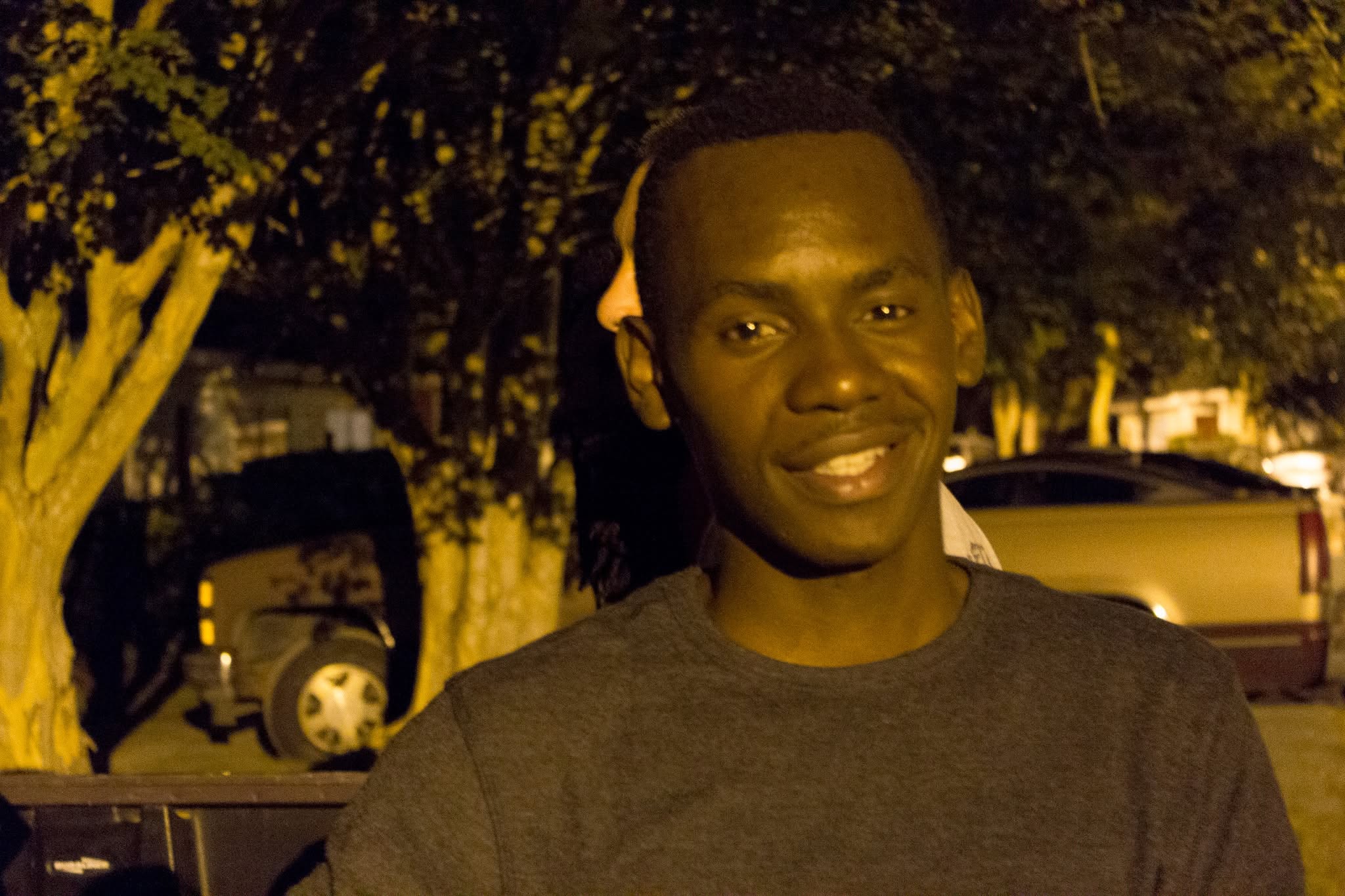
At eighteen, I understood taste primarily as a means of distinguishing myself from my peers. My curiosity about the arts was inseparable from my desire to be different, to command attention, and to attract the young women I fancied. I wanted to be recognized, and I was beginning to understand that what we wear, listen to, and create can communicate something about who we are before we ever say a word.
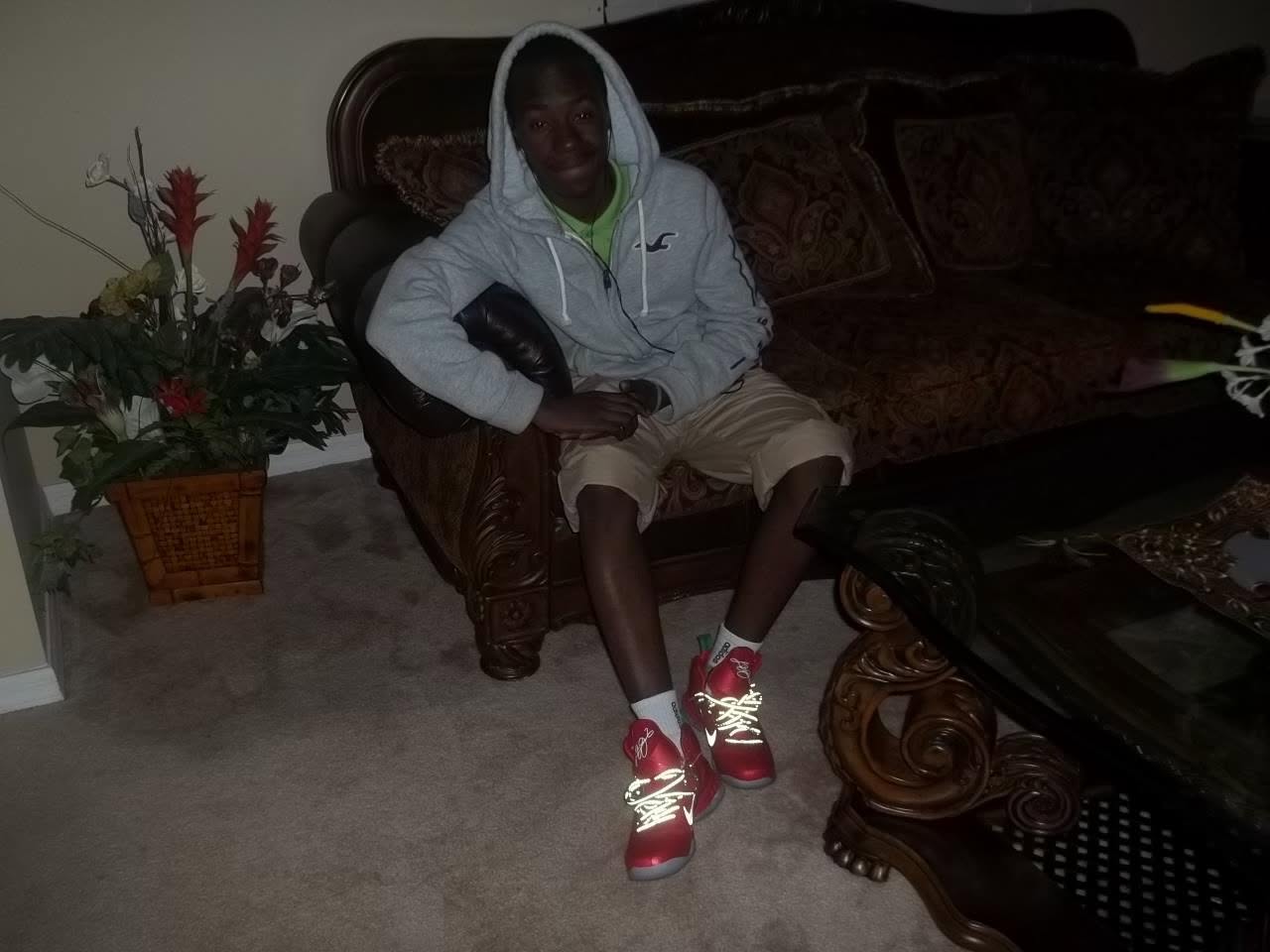
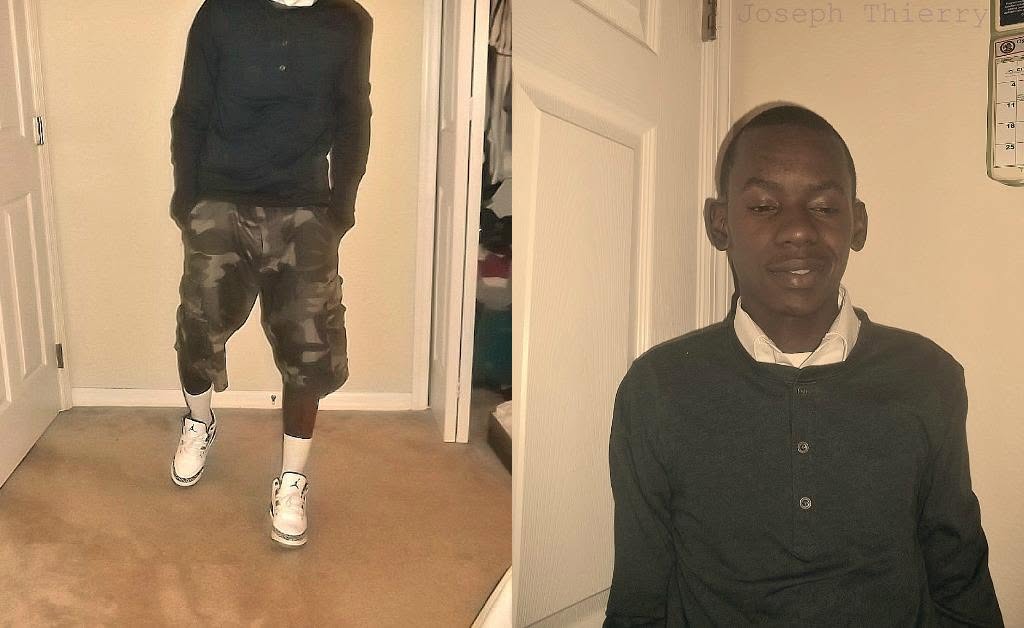
Although I never joined a traditional fraternity, I found a group of like-minded men who shared my enthusiasm for exploring our creative interests. Like many young people growing up in an American metropolitan area, I understood streetwear as a form of cultural currency. The more niche the piece, the greater its perceived value. At the time, Pensacola’s streetwear culture was not as developed as Orlando’s, creating an opportunity for my particular sensibilities to stand out. Wearing Ralph Lauren, retro Jordans, and Kevin Durant’s Easter colorways gave me a degree of cultural relevance among young people from Jacksonville and the greater Duval County area. I developed a small reputation, and eventually, I began hosting parties in my apartment.
From Attention to Expression
My first party attracted a crowd that extended well beyond my immediate social circle. The evening took a turn when a major fight broke out. Someone was severely assaulted by a rival gang member or an associate, leaving a stranger bleeding on my living room floor. Unable to manage the situation on my own, I called the police.
At eighteen, I was beginning to understand the relationship between independence and responsibility. Until then, I had largely understood influence as the ability to attract people and command a room. I enjoyed the feeling of being cool, experiencing what Gen Z might call having “aura.” But that night forced me to consider a different possibility: someone could be seriously hurt because of an event I had organized. Attention had consequences, and the liability was real.
The experience changed my relationship with the kind of recognition I wanted. I began looking for ways to build a different reputation, one rooted less in the ability to gather a crowd than in the ability to make something that gave people a reason to stay. That summer, I turned more deliberately toward art.
The collective energy I shared with my new friends gave us a sense of belonging and the motivation to remain committed to our craft. We challenged one another to look beyond the surface. I wanted to explore unconventional themes, particularly those that invited questions rather than offered easy answers. Instead of simply consuming the music that resonated with me, I began translating my interpretations of it into visual art.
Interpreting “American Wedding”
One of my first attempts to turn a musical concept into a visual narrative was inspired by Frank Ocean’s “American Wedding,” his interpolation of the Eagles’ “Hotel California.” At nineteen, the song prompted me to consider marriage in a way I had not before. Beyond its romantic ideal, what did the institution represent? What were its benefits, its costs, and its implications for the lives of those who entered into it? I began asking myself questions that felt unusually consequential for someone my age: Do I really want to get married? What does it mean to be a husband? Can we achieve lasting satisfaction through commitment?
The song gave me a framework for questioning an institution I had previously encountered mostly through its romantic ideal. I became interested in the tension between the promise of marriage and the weight of the commitment itself. In my interpretation, Ocean was exploring how marriage could be treated as an attainable milestone, entered into impulsively despite its lasting legal and emotional consequences. I began to wonder whether marriage had become commoditized in American culture—a socially recognizable marker of completeness rather than an enduring commitment to remain together through adversity.
The lyrics that most informed my interpretation were:
Getting married in a courthouse Writing vows in a rush Making out before the judge With my teenage wife Got a wedding band done That I just might die with It's an American wedding They don't mean too much But we were so in love We had an American wedding Now what's mine is yours That's American law
My reading of the song also led me to consider how marriage is understood across different cultural contexts. In the United States, a courthouse wedding or elopement can represent convenience, independence, and personal freedom. In other contexts, marriage may carry more visible familial, religious, or communal significance. Neither approach is inherently more meaningful than the other, but the contrast encouraged me to question the assumptions I had absorbed about commitment. The prospect of dividing assets accumulated over a lifetime also made me consider the financial implications of a decision often framed primarily as a romantic one.
I took those questions to my sketchpad.
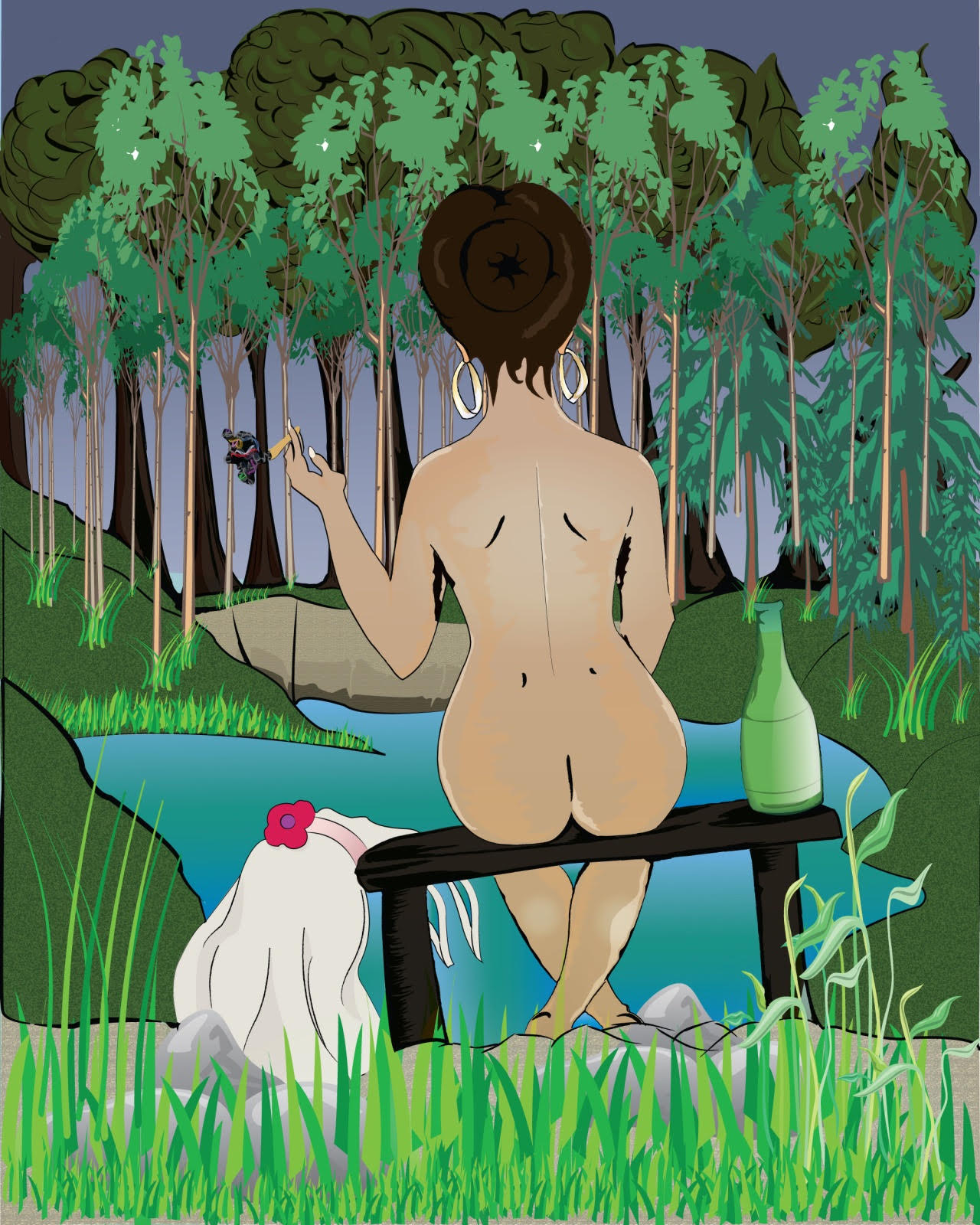
I drew a woman sitting naked beside a lake, her back turned to the viewer, a white wedding dress beside her and a joint in her left hand. She appeared to be contemplating the decisions that had brought her there. The image was my attempt to give visual form to the tension I perceived in the song: the distance between the romantic promise of marriage and the uncertainty of committing to another person for life.
I was not simply illustrating a song. I was making an argument about it, one I did not yet have the vocabulary to express fully. The drawing gave form to an uncertainty I was still working through. What mattered was not whether my interpretation was definitive, but that I had developed one of my own.
The artwork eventually took on a life beyond my original intention. It resonated with other students and helped me establish a reputation on campus as the “art kid.” Encouraged by the response, I had fifty prints made, some of which I sold and others I gave to close friends and confidants.
The process was empowering because it revealed something about my own capabilities. I could take an idea that felt intimate and difficult to articulate, translate it into a visual language, and invite others to engage with it. Sharing the work required vulnerability. I was afraid that people might misunderstand it, reject it, or respond negatively. Yet I chose to put my taste on display in a community of strangers whose reactions I could not control.
Their responses mattered, but not simply because they validated my work. The experience taught me that my perspective could have an impact beyond myself. I had moved from trying to distinguish myself through what I wore to expressing myself through what I thought. That shift gave me a new kind of confidence: not merely the confidence to attract attention, but the confidence to develop and defend a point of view.
Looking back, I recognize that my taste emerged through a sequence of experiences. I encountered a cultural artifact, interpreted it through my own circumstances, transformed that interpretation into something tangible, and exposed the result to an audience. Each stage taught me something about my sensibilities, my capabilities, and my tolerance for risk. The finished artwork was only one part of the process. The other part was the person I became by making it.
The Difference Between Creation and Judgment
This is where I draw the distinction between artificial intelligence and taste.
An AI system could have helped me analyze “American Wedding,” explore its themes, or generate a visual interpretation of its lyrics. It might even have produced an image that resembled mine. But generating a similar artifact would not have reproduced the process through which I arrived at my interpretation. The drawing emerged from my friendships, my ambitions, my uncertainty about commitment, and my desire to make something that reflected how I saw the world. Sharing it exposed that perspective to other people, whose responses helped me understand what I had created and what I was capable of doing.
The distinction is not simply between what a machine can and cannot produce. It is between producing an artifact and participating in the personal process through which that artifact acquires meaning.
I do not believe artificial intelligence has no place in the creative process. AI can help us discover references, test ideas, explore unfamiliar techniques, and articulate thoughts we have struggled to express. These capabilities can expand our creative possibilities. But there is a difference between using a tool to extend our judgment and allowing that tool to substitute for the judgment we have yet to develop.
Taste is more than the ability to identify what is aesthetically pleasing or culturally relevant. It is the judgment we develop through experience: what attracts us, what challenges us, what we choose to create, and what we are willing to reveal about ourselves. It is informed by our encounters with the world and refined by the decisions we make in response to them.
My taste is inseparable from the circumstances that shaped it. Streetwear taught me how cultural signals could establish belonging and distinction. Hosting parties taught me that attention carries responsibility. Frank Ocean’s music encouraged me to interrogate an institution I had previously taken for granted. Making and sharing the drawing taught me that an interpretation could become something meaningful to others without losing its personal origins.
Artificial intelligence may be able to imitate the visible expressions of these experiences, but imitation alone does not reproduce their significance in my life. My taste reflects not only what I like, but also the experiences that taught me why I like it and the questions that continue to shape how I see the world.
The Risk of Outsourcing Taste
The risk of outsourcing taste, then, is not necessarily that AI will produce something inferior to what we could make ourselves. It is that we may become so accustomed to having our preferences anticipated, our options curated, and our decisions accelerated that we leave ourselves fewer opportunities to discover what we value independently. When every curiosity can be answered immediately and every aesthetic impulse can be satisfied on demand, we risk confusing the fulfillment of a preference with the development of judgment.
I no longer think of taste as a collection of preferences. It is a record of the things we have encountered, the questions we have asked, the risks we have taken, and the judgments we have learned to trust. It develops through participation in the world, not simply through exposure to its contents.
Artificial intelligence can help us explore what we like. It can even help us articulate why. But the process of discovering our preferences, confronting our assumptions, and deciding what deserves our attention is part of how we become ourselves.
The question, then, is not whether AI can produce something that reflects our taste. It is whether, in allowing it to anticipate our preferences and accelerate our decisions, we leave ourselves enough room to develop taste of our own.